

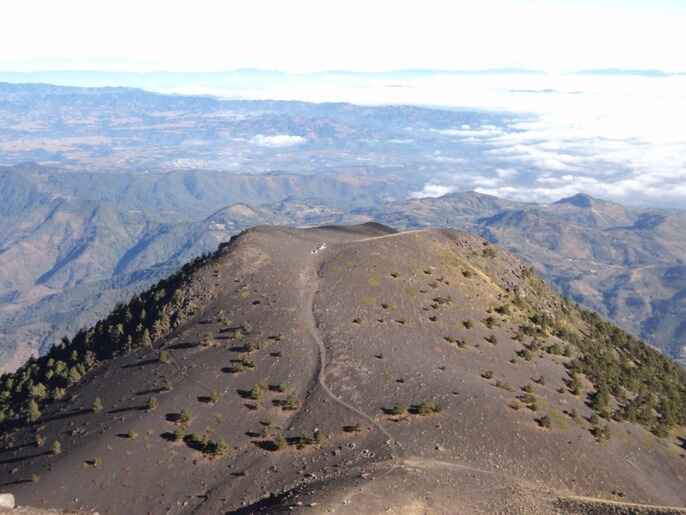
The Thornthwaite system climate classification system classifies the climate of Acatenango Volcano as a temperate climate. However, because of its elevations, on sunny days temperatures remain within a range of 25° to 30° Celsius, and they may drop to as low as -5° Celsius on the coldest days and in the upper parts of the volcano.
To climb Acatenango Volcano, it is necessary to bring clothing for cold weather. At night and early in the morning, the temperature usually drops due to wind, rain, or humidity.
Between the months of November and April, the weather is colder. However, this is the season when you can enjoy the best views, because it is a period with stronger winds and clearer skies are common. It is also the dry season, making it the most recommended time to climb.
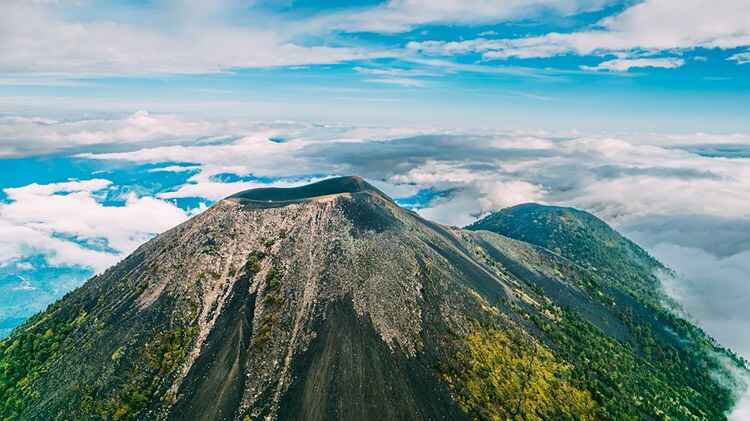
Acatenango Volcano has around 4 microclimates during the ascent. These can be divided into: crop fields, the initial part of the climb where you can see the horizon covered with corn, pea, bean, and vegetable fields; the second microclimate is a cloud forest, a steep and somewhat slippery area that usually becomes difficult during the rainy season; the next microclimate is a high alpine forest, a green area with large trees where you can enjoy views of other volcanoes; and finally, the volcanic zone, which is the final section toward the summit. This part becomes difficult because it is steep and covered with volcanic sand, making it harder for hikers to move forward.














 Prices and Schedules
 Book Tours
 Location and How to Get There
 Map and Routes
 Recommendations
 Weather
 History
 Contact
 English

 Book a Guide or Tour via